Jesus Sandrea
Paused
A house of opinions
Case study

Basic at Google

Designing the digital storefront for Google’s hardware.

Focus
Product launches, product storytelling, seasonal campaigns, design systems
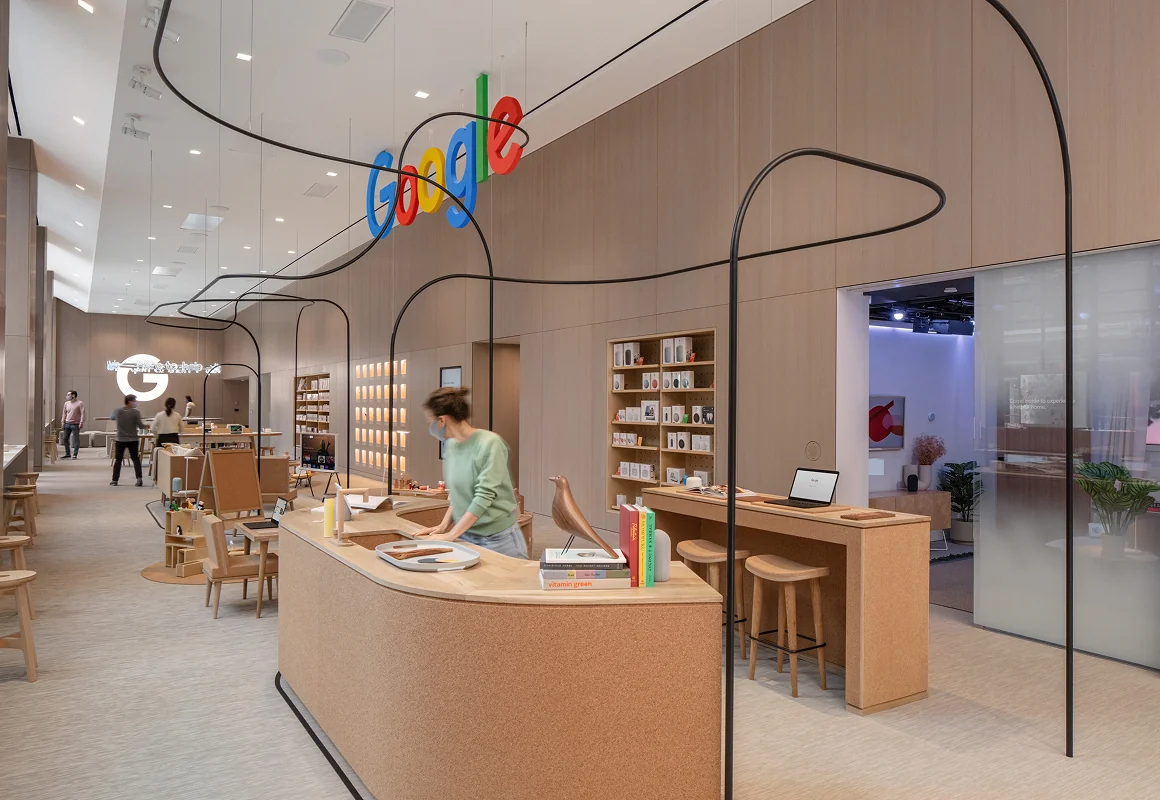
Google Store interior with products displayed in a welcoming, everyday setting.
Partners
UX Team, Design Systems and Engineering.

Overview

At BASIC, Jesus worked on the Google Store across product launches, seasonal campaigns, and the store’s design system. His work included Chromecast with Google TV, Nest Cam, Stadia, the Google Store homepage, and Nest category pages, alongside campaigns for Father’s Day, Mother’s Day, Earth Day, and Black Friday.

Much of this work came down to helping people understand how a product could fit into their lives. For Nest Cam, that meant showing a more human side of home security. For Chromecast, it meant making the value of a new entertainment experience clear. Across both, Jesus worked on page design, storytelling, and animation concepts in collaboration with lead designers, art directors, creative directors, and production partners.

A more human side of home security

The Nest Cam page needed to introduce Google’s new indoor and outdoor battery camera, explain its benefits, and help people feel comfortable bringing it into their homes. The macro goals were to convert, educate, and engage, pairing clear reasons to buy with practical answers about installation, compatibility, and how the camera would fit into an existing smart home.

Customer research included the king of the castle persona: people who saw home security as something they could control and felt more at ease with the right tools. The new user was considering a first camera and might already own other smart home products, while the existing user was more likely to add another Nest Cam. These perspectives shaped a story that balanced reassurance, ease of setup, and the value of expanding an existing system.

The team’s review of competitors looked at design, education, and human touch, pointing to an opportunity for a warmer approach to home security. Value over fear became the guiding idea, with versatility, trust, and timeliness shaping how the page showed a typical family using the camera.

One of the most memorable decisions was making the “unwanted visitor” the family dog. It gave the team a playful way to explain the camera’s usefulness while keeping the story grounded in daily life. That approach carried through the lifestyle imagery and product narrative, helping the page feel consistent with Google’s idea of a helpful home.

Jesus’s contribution covered page design, brand analysis, storyboarding, animation, and 3D concepts. He worked with the creative and production team, alongside Google’s UX, design systems, and engineering partners.

Jesus helped translate the narrative into wireframes, determine where custom modules were needed, and identify where existing components could support the story.

With mobile making up the majority of the audience in the research, the story needed to work within a small screen. The page brought together the camera’s flexibility, ease of installation, and included features, while explaining what Nest Aware added and helping visitors consider the value of the subscription.

Introducing Chromecast with Google TV

Chromecast with Google TV introduced a new TV interface and a voice remote with Google Assistant. The product page needed to explain what those additions made possible, from finding something to watch across streaming services to getting recommendations and using voice control. The macro goals of educate, convert, and seo connected product storytelling with launch visibility and purchase consideration.

The audience, described as “Google-loving content moguls,” already valued Google’s products but faced a fragmented entertainment experience. That gave the page a clear direction: show how the device could bring content together and make choosing what to watch easier.

Jesus was an individual contributor on the campaign, working closely with the lead designer to execute the team’s creative vision. His contribution included early concepts, page structure, design iterations, animation studies, and final layouts.

The remote was an important part of the story. Its compact design and voice controls gave the team a tangible way to introduce the product’s capabilities. The team paired that with the broader entertainment experience, showing how the device brought content, apps, and Google features together on the TV.

The challenge was to make those capabilities easy to follow. The team organized the page around their value at home: finding a show, exploring recommendations, and getting started with a simple setup. Animation was part of the concept from the beginning, helping introduce the hardware and give the page a sense of progression as the story unfolded.

Across the Google Store

Beyond these launches, Jesus worked on Stadia, the Google Store homepage, Nest category pages, and seasonal campaigns. Each asked for a different balance of product information, visual expression, and promotional messaging.

The seasonal work was especially theme driven. Each campaign needed a visual language that suited the occasion and made the offer clear. Jesus focused on developing those treatments within the Google Store’s broader identity. For Stadia, he worked on a page that built on its existing design language.

Alongside the campaigns, Jesus contributed components to the store’s design system, which drew from Material Design. This work meant considering how components would accommodate different products, content, and page layouts, while leaving room for individual campaigns to have their own visual treatment.

Reflection

His work at BASIC focused on making Google’s products relevant to everyday life. He connected product features to familiar situations, carrying those ideas through page structure, imagery, and interactivity. He partnered with designers and creative directors to shape product narratives, develop interaction concepts, and carry the work from early explorations through final design. His systems contributions extended that thinking beyond individual campaigns, with reusable components and modular page structures that could be adapted for other products, seasonal promotions, and future launches across the Google Store.